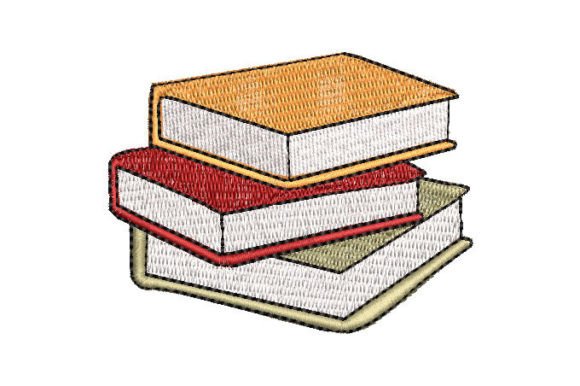
Three School Books Embroidery Design Review
As an embroidery designer who has spent years refining designs for commercial production, I approach every new digital file with a critical eye. It is not enough for a design to simply look good on a screen; it must translate flawlessly onto fabric, hold up under the stress of industrial machines, and enhance the brand identity of the business using it. Today, I am reviewing the Three School Books machine embroidery design. The description promises to "embellish your fabrics" with a touch of "whimsy and charm," suggesting a design that leans towards the playful yet classic. For small business owners, Etsy sellers, and apparel decorators looking to expand their catalog with small business merch, understanding the practical application of this embroidery file is crucial.
First Impressions: Whimsy Meets Professionalism
The title, Three School Books, immediately evokes a sense of nostalgia, education, and simplicity. When I first analyzed the visual personality of this design, it struck me as having a rustic, handmade aesthetic. It does not scream modern minimalism or bold corporate branding; rather, it whispers of boutique cafes, artisan bakeries, and creative studios. The concept of stacked books suggests stability, learning, and care—values that resonate deeply with customers who support local, handmade businesses.
For a brand identity focused on warmth and approachability, this design fits perfectly. It feels premium not because of intricate complexity, but because of its clean, recognizable silhouette. However, the term "whimsy" requires careful handling in a commercial context. If the execution lacks precision, the design can appear amateurish. Therefore, the success of this digital embroidery file hinges entirely on the technical details: thread contrast, stitch density, and spacing. It is a design that rewards high-quality production and penalizes shortcuts.
Real-World Business Applications
In my experience, the most successful embroidered products are those that serve dual purposes: they are functional items that also act as walking billboards for the brand. Here is how Three School Books performs across various common use cases:
- Embroidered Patches: This design translates exceptionally well into iron-on or sew-on patches. The stacked book motif is compact and self-contained, making it ideal for back-of-shirt patches or bag accents. It allows customers to wear their affinity for reading or learning subtly.
- Apron Embroidery: For bakery owners, florists, or crafters, a chest-sized logo is standard. Placing this design on the pocket or upper chest of a canvas apron adds a touch of character without overwhelming the garment. It signals a friendly, welcoming environment.
- Tote Bag Design: A tote bag design featuring these books is a staple for any creative studio or bookstore. It reinforces the brand’s connection to literature and creativity. The vertical stacking of the books mirrors the vertical orientation of a tote bag, creating a harmonious visual balance.
- Cap Embroidery: While cap embroidery often favors simple icons, this design could work well on the side panel or back of a structured cap, offering a unique differentiator from standard logo placements.
- Product Packaging Accents: Beyond apparel, consider stitching this onto paper tags attached to retail products. It adds a tactile, handmade product feel that elevates perceived value.
Furthermore, this design serves as excellent design assets for event merchandise. Whether it is a literacy charity run, a local author’s fair, or a school supply drive, Three School Books provides immediate thematic relevance. It helps in building customer trust by showing that the business understands and participates in community-centric values.
Technical Considerations and Risk Areas
While the concept is strong, there are specific areas where this design requires careful management to avoid production failures. As a professional, I advise you to scrutinize the following elements before committing to bulk orders:
- Small Patch Sizes: If you intend to scale this down to a 2-inch patch, you must ensure that the individual books remain distinct. If the outlines merge, the design will become a muddy blob. Test at the smallest intended size to confirm legibility.
- Thread Colors and Contrast: The success of this design relies heavily on color separation. Using similar thread colors for adjacent books will cause them to blend together. High contrast between the book covers and the background fabric is essential. Always review thread colors against your actual fabric swatches, not just the digital preview.
- Stitch Density: Check the stitch density carefully. Too much density in a small area can cause puckering, especially on lightweight fabrics like cotton tees or thin tote bags. Conversely, too little density may result in visible fabric show-through. You may need to adjust the underlay stitches to stabilize the fabric during digitizing.
- Hoop Size and Stabilizer: Confirm the required hoop size. A design that looks fine in a large hoop may shift or distort if attempted in a smaller hoop due to tension issues. Always use a proper stabilizer matched to your fabric texture. For stretchy knits, a cut-away stabilizer is non-negotiable to prevent distortion over time.
- Curved Surfaces: Applying this to curved surfaces like caps or sleeves requires precise placement. The stacking nature of the books means that any curvature distortion will be immediately noticeable. Practice on scrap material first.
Additionally, be cautious when applying this to dark uniforms or textured fabrics like heavy denim or fleece. On highly textured surfaces, fine details may get lost. On dark backgrounds, light thread colors might require a dense white underlay, which can add stiffness to the fabric. Evaluate whether the finish meets your quality standards for commercial embroidery.
Impact on Brand Identity and Customer Engagement
Using Three School Books is not just about decoration; it is a strategic choice for brand identity. In a market saturated with generic logos, a design that tells a story stands out. This motif communicates reliability, tradition, and intellectual curiosity. For a small business, this can significantly enhance buyer engagement. Customers are more likely to connect with a brand that appears thoughtful and curated.
When used consistently across custom apparel and product labels, it creates visual consistency that reinforces recognition. A staff member wearing an apron with this design becomes a brand ambassador. The whimsical charm invites conversation, breaking down barriers between the business and the consumer. It positions the brand as accessible and human, which is invaluable in the age of automated retail.
Final Designer Notes for Production
Before you proceed with mass production or list items on Etsy, follow these practical steps:
- Test in Black and White: Convert the design to monochrome to check its structural integrity. If it loses meaning without color, it is too dependent on aesthetics rather than form.
- Create a Printable Mockup: Use a printable mockup to visualize the design on your actual products. This helps in client approval processes and ensures the scale is correct.
- Compare Beside Other Assets: Ensure this design aligns with your other design assets. Does it match the font style and line weight of your logo? Consistency is key to a professional look.
- Confirm Commercial Licensing: Most importantly, verify the licensing terms of the embroidery file. Ensure you have the right to sell finished goods created with this design. Do not assume standard personal licenses cover commercial merchandise.
In conclusion, Three School Books is a versatile and charming addition to any embroiderer’s library, provided it is executed with technical precision. It offers a perfect blend of whimsy and professionalism, making it an excellent choice for small business merch that aims to build lasting connections with customers. By paying attention to stitch density, color contrast, and stabilization, you can transform this simple motif into a powerful tool for brand growth.